✕

Guides
Practical writing on after-hours coverage, on-call scheduling and secure messaging — for the people who actually have to make it work.
Most practices are sold one or the other. What each actually does, the seam between them where after-hours calls go wrong, and four questions that tell you which you need.
The caller is a parent, not the patient. Why an incomplete message costs more in pediatrics, what happens when the on-call roster moves, and the questions worth asking any vendor.
A stale copy of your schedule, senders guessing who is covering, no escalation when nobody answers. The five failures, and the questions that expose them in a sales call.
The rota is usually somebody’s second job. What makes one fair, the coverage patterns most software cannot express, and why publishing a schedule is not the same as routing on it.
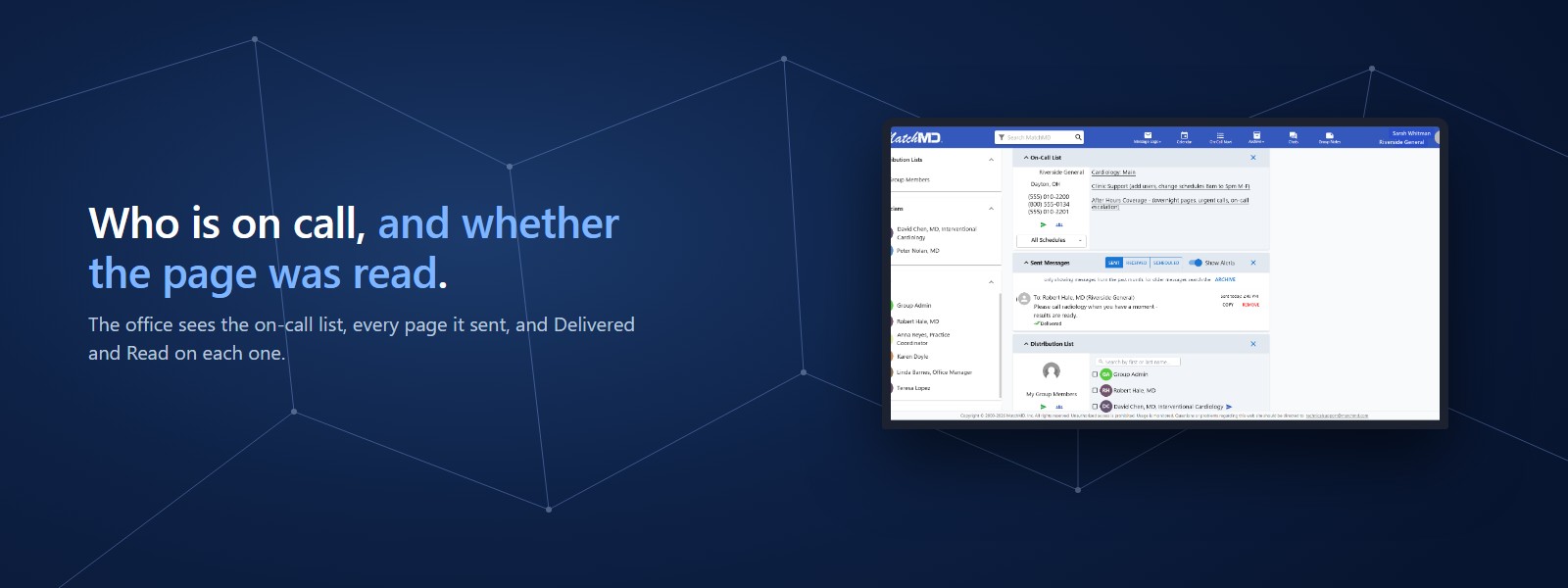
Most answering services can show when a message was sent. What delivered, read and replied each prove, where the record breaks, and what a read receipt cannot tell you.
The patient is at home, the caller is often family and the nurse on call may be on the road. Who is on call, what the message must carry, and keeping personal numbers private.
How a stroke team cut activation time using one alert instead of a phone tree — the case behind MatchMD’s code-team coordination.
We will tell you honestly whether MatchMD is the right fit.
Book a demo